Magnetic Habitats
JRAD Magnetic Habitats Humanity once faced a limit that no technology could overcome: the finite surface of Earth. Land filled, cities expanded, and the horizon became a boundary. JRAD Flight Systems & Technology shattered that boundary. Through recursive magnetic field architecture, JRAD created the Magnetic Habitat — a field‑supported structure capable of hovering in stable equilibrium above engineered magnetic beds. This innovation transformed every surface into livable space: land, mountains, lakes, oceans, deserts, and swamps — all now accessible, habitable, and sustainable. Each Magnetic Habitat is a self‑contained environment balanced within its own magnetic envelope. It does not rely on gravity, combustion, or terrain. It harmonizes with the planet’s magnetic field, creating stationary, elevated living zones that expand civilization without consuming new ground. JRAD didn’t just build a new kind of home — it solved a world problem. It redefined what “space” means for a growing population. It proved that livable environments can exist anywhere equilibrium can be established. Magnetic Habitats are not architecture — they are magnetic civilization.

Hover Habitat Node
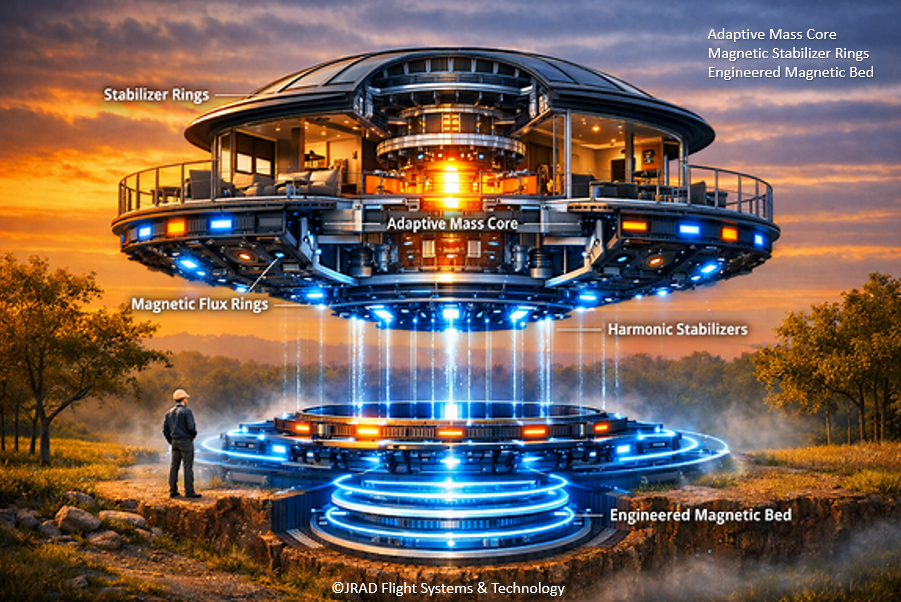
The Hover Habitat Node is the heart of JRAD’s magnetic civilization — a structure that doesn’t fly, doesn’t drift, and doesn’t rely on engines. It simply exists in equilibrium, held in place by a continuous negotiation between its mass identity and the Engineered Magnetic Bed beneath it. It is not a vehicle. It is a magnetic inhabitant — a stable, elevated living space designed to remain fixed above any terrain. What makes the Node revolutionary is its adaptability. It dynamically adjusts its mass properties based on configuration, and environmental conditions, maintaining perfect balance without mechanical correction. This is the moment where the impossible becomes practical: a home, office, or facility that hovers with the same reliability as a building anchored to the ground. The Hover Habitat Node is the first structure that proves magnetic habitation is not science fiction — it is magnetic engineering applied to human living.
Engineered Magnetic Bed
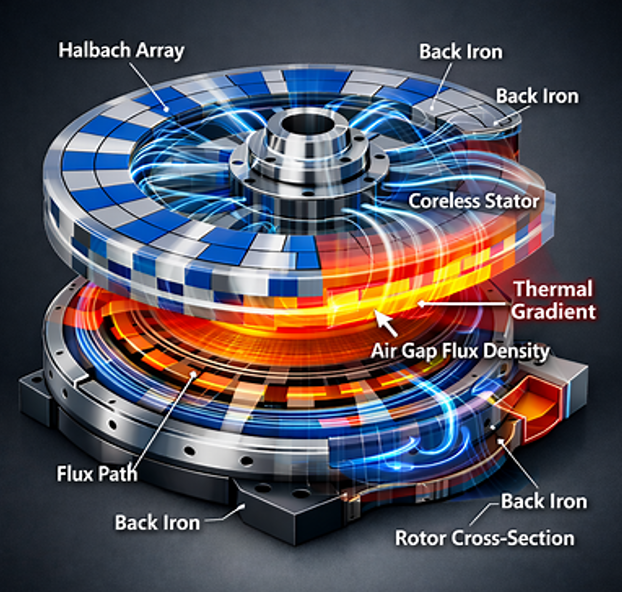
The Engineered Magnetic Bed is the foundation of JRAD magnetic habitation. Layered coils, iron lattice structures, and harmonic stabilizers work together to generate a stable, uniform lift field. This ground‑based system anchors the Hover Habitat Node above it, maintaining equilibrium through continuous magnetic negotiation. The Bed transforms any terrain into livable space — land, water, mountains, deserts, and beyond.
Coherence Corridor
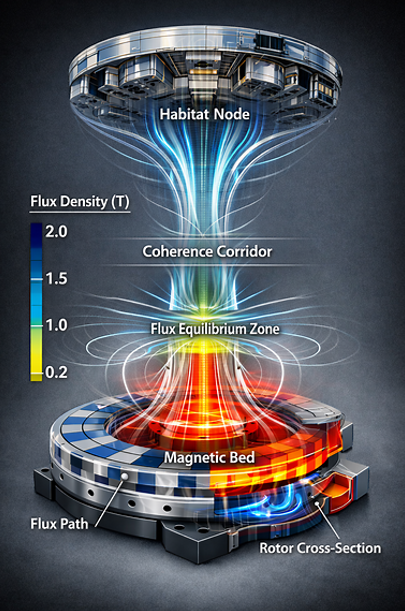
The Coherence Corridor is the magnetic channel that links the Habitat Node to the Magnetic Bed. It ensures stable alignment, prevents lateral drift, and maintains field symmetry. The Corridor is the “invisible column” that keeps the habitat locked in place.
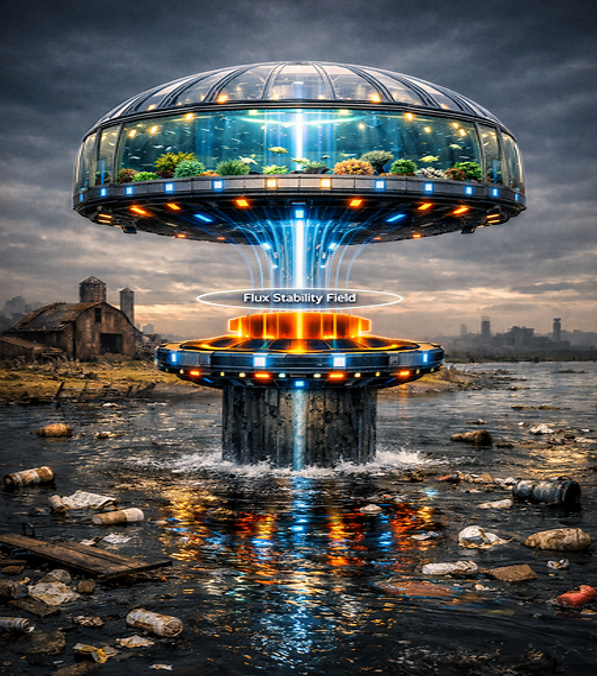
ENCLOSED BIO‑PRESERVATION MAGNETIC HABITAT
Humanity is running out of safe places to grow food. Across the world, toxins seep into the soil, pathogens spread through livestock, and our oceans carry more contaminants than life. Diseases mutate faster than our defenses, and the ecosystems that once fed us are compromised under the weight of our own pollution. The Enclosed Bio Preservation Habitat exists because the world outside based on current trends will struggle to sustain us. Each Habitat — Agricultural, Livestock, and Aquatic — is a sealed, contamination free environment engineered to protect the essential sources of human survival from the accelerating threats in land, air, and water. EBPH is not a luxury. It is the next phase of human food security. A system built to preserve life when the natural world can no longer do it alone.Enclosed Livestock Habitat Concept
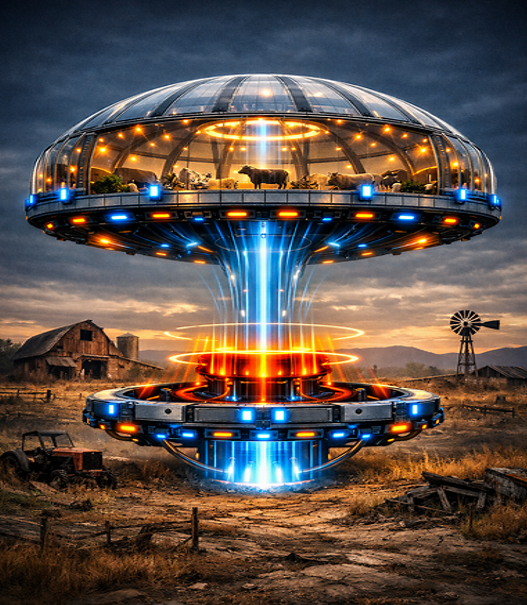
The world’s livestock systems are breaking down faster than we can protect them. Across continents, viral mutations spread through herds, heat stress weakens immune systems, and contaminated soils introduce toxins into the very animals we depend on for survival. Traditional farms can no longer guarantee safety, stability, or continuity. The Enclosed Bio‑Preservation Habitat: Livestock is engineered to safeguard the species we cannot afford to lose. Inside this sealed, contamination‑free environment, livestock are shielded from airborne pathogens, soil‑borne toxins, and the accelerating spread of cross‑species diseases. Controlled climate, purified feed cycles, and magnetic stabilization ensure a level of protection the natural world can no longer provide. This is not an alternative to traditional farming — it is the infrastructure that will preserve livestock when the outside world cannot.
Enclosed Vegetation Habitat Concept

One day, the soil that feeds humanity may no longer be safe. Based on current trends, pesticides, heavy metals, industrial runoff, and chemical residues will continue seeping deeper into the land. Fields that were once fertile may carry toxins that disrupt plant growth, weaken root systems, and contaminate the food we depend on. Fungal blights and plant‑borne diseases will likely mutate faster than traditional agriculture can respond. The Enclosed Bio‑Preservation Habitat: Vegetation is engineered to protect the world’s essential crops from a compromised environment. Inside this sealed, contamination‑free ecosystem, plants and vegetables grow in purified substrates, shielded from airborne pollutants, soil toxins, and climate instability. Controlled light cycles, nutrient‑balanced irrigation, and pathogen‑free air ensure a level of purity and consistency the outside world may not be able to guarantee in the future. This is not the future of farming — it is the infrastructure that will preserve our food supply when open‑air agriculture requires an alternative.
Enclosed Aquatic Habitat Concept